
















Mastering Heavy Crane Simulator Operations and Challenges
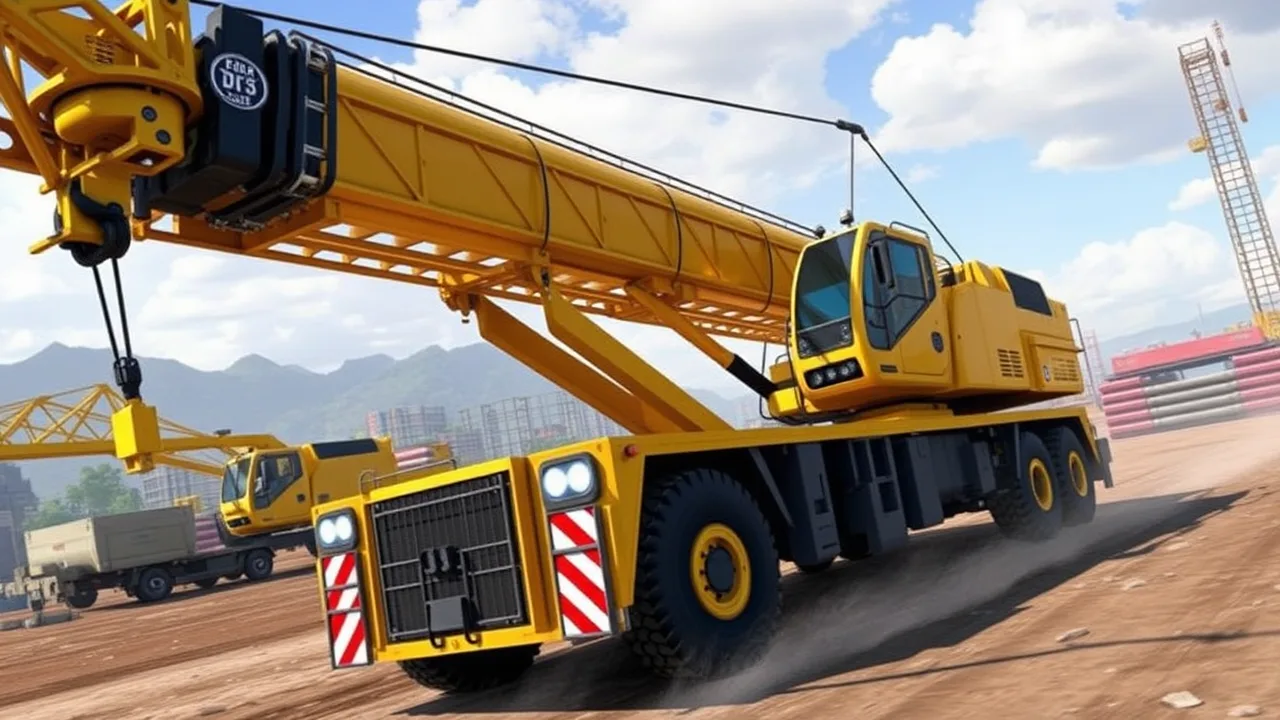
Step into the operator's seat and explore the precise world of heavy machinery with this engaging simulation experience. This guide offers practical insights into gameplay mechanics, control schemes, and realistic challenges, helping players navigate complex lifting tasks with confidence. Whether you are new to simulation games or looking to refine your skills, the following sections provide a clear path to mastering the virtual crane.
This keyword page works best when it helps players move from general interest to a more focused selection. For readers who want more games related to heavy crane simulator, heavy crane simulator gives a direct path to similar options without breaking the flow of the page.
At its heart, the simulation focuses on the methodical process of lifting, transporting, and placing heavy objects. Players must assess the weight of the cargo, calculate the necessary boom extension, and account for environmental factors like wind and ground stability. The core loop involves a satisfying cycle of receiving a task, preparing the crane, executing the lift with precision, and securing the load at the destination. This repetitive yet deep structure rewards patience and careful planning over hasty movements.
Essential Controls and Interface Elements
Mastering the controls is the first step toward efficient operation. The interface typically displays critical information such as load weight, boom angle, and radius, which are essential for maintaining crane stability. Players use a combination of keyboard inputs or on-screen buttons to manage the boom's elevation, the jib's extension, and the winch's cable length. Understanding how these inputs interact allows for smooth, coordinated movements. The camera system also plays a vital role, offering multiple perspectives to help you align the hook with the load and monitor the surrounding area for obstacles.
| Feature | Details |
|---|---|
| Gameplay style | Task-based simulation with a focus on precision and physics |
| Controls | Keyboard and mouse or touch inputs for boom, winch, and rotation |
| Session pace | Deliberate and methodical, rewarding careful planning |
| Device fit | Optimized for desktop browsers with mouse and keyboard |
| Category match | Simulation and heavy machinery operation |
Challenges of Load Management and Stability
One of the most critical aspects of the simulation is managing the crane's stability while handling loads. Every lift requires a careful assessment of the load's center of gravity and the crane's operational limits. Extending the boom too far or lifting a weight that exceeds the crane's capacity can lead to instability, potentially causing the vehicle to tip over. Players must learn to read the on-screen indicators that warn of impending instability and adjust their strategy accordingly, often by repositioning the crane or using a shorter boom configuration.
Environmental Factors and Operational Hazards
The virtual construction site is not a static environment. Players must contend with various factors that can affect a lift, such as changing weather conditions and tight, cluttered workspaces. Wind can cause the suspended load to sway, requiring constant correction with the winch and boom. Obstacles like scaffolding, power lines, and other vehicles demand careful pathfinding and spatial awareness. Navigating these hazards adds a layer of realism and challenge, forcing players to think several steps ahead.
Strategies for Efficient Task Completion
Success in this simulation is not just about completing a task, but doing so efficiently. A key strategy is to plan the entire lift before moving the first control. Visualize the path the load will travel, identify potential snags, and determine the optimal crane position. Smooth, gradual inputs are always better than sudden jerks, which can destabilize the load. Taking the time to set up the crane correctly at the start of a mission often saves time and prevents accidents later on.
Progression and Skill Development
As players advance, they will encounter more complex scenarios that test their growing skills. Early tasks might involve simple lifts in open areas, while later challenges could require placing heavy beams in confined spaces or coordinating lifts with other site activities. This gradual increase in difficulty helps players build a solid foundation of skills, from basic hook control to advanced load maneuvering. Each successful mission reinforces the principles of safe and efficient crane operation.
FAQ
What is the main objective in this simulation? The primary goal is to complete various lifting and transport tasks by operating a heavy crane with precision and safety. Each level presents a unique challenge that requires careful planning and execution.
How do I prevent the crane from tipping over? To maintain stability, always check the load weight against the crane's capacity chart, avoid extending the boom too far, and make slow, deliberate movements. Repositioning the crane closer to the load can also help.
Are there different types of cranes to operate? The simulation focuses on the operational depth of a specific heavy crane, allowing players to fully master its mechanics, including boom extension, jib angles, and winch control.
Can I play this game on a mobile device? The game is primarily designed for desktop play with a mouse and keyboard, which provides the most precise control over the crane's complex movements.
What happens if I fail a task? Failing a task, such as dropping a load or causing an accident, typically allows you to restart the mission. This provides an opportunity to analyze what went wrong and try a different approach.
Is there a time limit for the tasks? While some challenges may have a suggested time, the emphasis is on accuracy and safe operation rather than speed. Rushing a lift is often the quickest way to fail.
Ready to test your skills and take control of the heavy machinery? heavy crane simulator offers a rewarding experience for anyone interested in the art of precision lifting.