



















Exploring the Thrills of Rocket-Soccer Gameplay
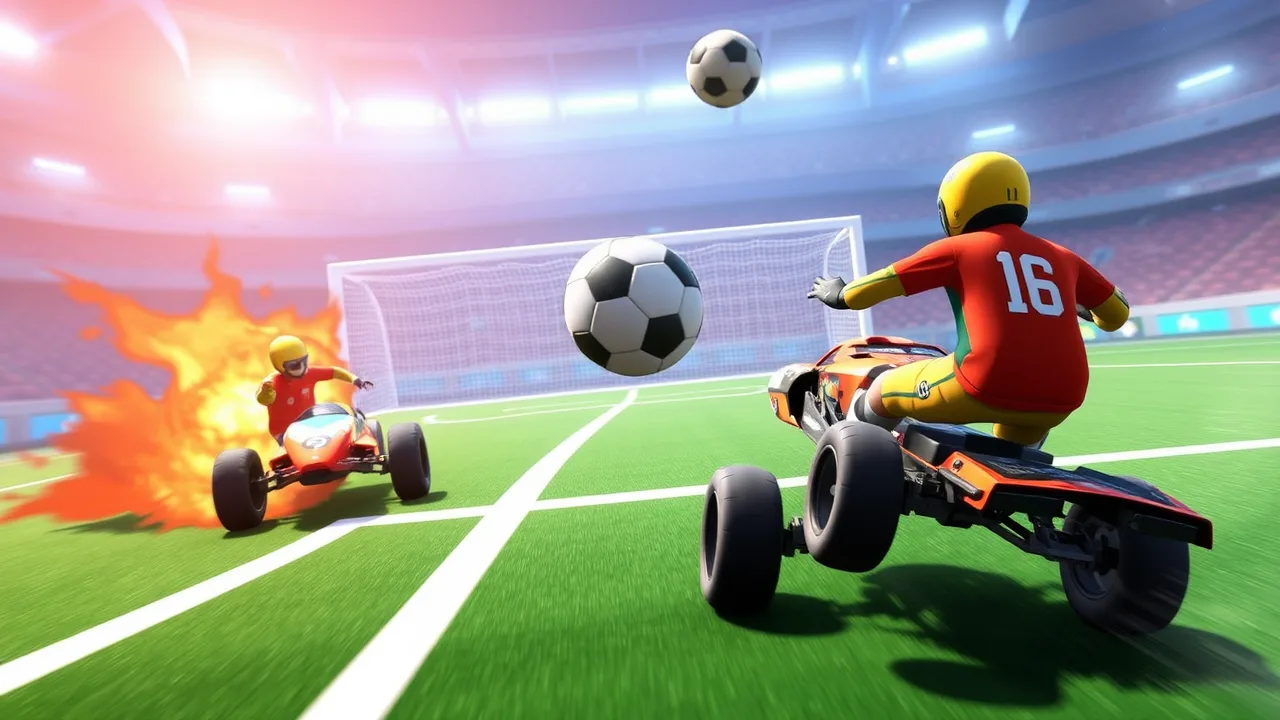
Step onto the futuristic pitch where high-octane automotive chaos meets the beautiful game. Rocket-Soccer is not your standard sports simulation; it is a physics-based arena experience that demands precision driving, split-second aerial maneuvers, and team coordination. Whether you are looking for a quick adrenaline rush or a deep competitive experience, this game offers a unique blend of vehicular combat and soccer mechanics that keeps players coming back for just one more match.
At its heart, the game revolves around a simple but thrilling premise: you control a powerful, rocket-boosted vehicle and must launch a giant soccer ball into the opposing team's goal. It strips away the traditional footwork of soccer and replaces it with boost pads, supersonic speeds, and explosive collisions. The physics engine is the star here, ensuring that every bounce, hit, and flip feels weighty and impactful. You aren't just driving; you are becoming a projectile to strike the ball with maximum force.
This fusion of genres creates a learning curve that is easy to pick up but incredibly difficult to master. New players can enjoy the chaos of simply ramming the ball, while veterans spend hours perfecting aerial control and wall-riding techniques. The environment is designed to facilitate this verticality, with ramps and curved walls that allow you to take the action off the ground and into the air, turning a standard match into a three-dimensional battle for territory.
Mastering the Art of Aerial Maneuvers
One of the most rewarding aspects of Rocket-Soccer is the ability to fly. Learning to boost your vehicle into the air to intercept a high ball is a game-changer. It transforms the gameplay from a 2D ground chase into a fully 3D aerial dogfight. To succeed, you must manage your boost meter wisely. Running out of boost while hovering over the goal can leave you stranded, while timing your jump perfectly can result in a game-winning dunk.
Aerial play also adds a layer of strategy regarding defense. You can fly up to block shots or clear the ball away from your goal line. However, this requires practice and muscle memory. The controls are intuitive, but the physics demand respect. If you approach the ball at the wrong angle, you might accidentally knock it into your own net or send it flying harmlessly over the crossbar. Mastering the air is the key to transitioning from a casual player to a competitive contender.
Understanding Vehicle Classes and Customization
While the core gameplay remains consistent, the choice of vehicle can influence your playstyle. Different chassis offer varying hitboxes, which affect how the car interacts with the ball. Some cars are flatter and wider, making them excellent for blocking shots and dribbling along the ground. Others are taller and narrower, often preferred for aerial play because their hitbox can strike the ball with different power angles.
Customization goes beyond aesthetics. While painting your car with decals and changing your wheels is fun, the real customization lies in adapting your driving style to your vehicle's strengths. If you are using a heavy, tank-like vehicle, you might focus on demolishing opponents and acting as a solid goalkeeper. If you are in a lightweight racer, you might focus on speed, rushing the ball, and making quick passes. Understanding these nuances allows you to build a loadout that complements your natural skills.
Game Mode Breakdown
The game offers various ways to enjoy the experience, catering to different moods and skill levels. Whether you want to team up with friends or test your skills against the computer, there is a mode designed for you.
| Feature | Details |
|---|---|
| Gameplay Style | High-speed, physics-based vehicular soccer |
| Controls | Accelerate, Boost, Jump, and Air Roll |
| Session Pace | Fast-paced, typically 5-minute matches |
| Device Fit | Optimized for keyboard, mouse, and gamepad |
| Category Match | Sports, Racing, Action, Multiplayer |
Standard matches usually feature 3v3 or 4v4 teams, balancing the chaos with enough tactical depth. In these modes, communication and rotation are vital. You need to know when to attack and when to rotate back to defense to cover the goal. Other variations might include 1v1 duels, which test your raw mechanical skill, or "Hoops" and "Dropshot" modes that change the objective from a standard goal to basketball hoops or breakable floor tiles. These variations keep the gameplay fresh and prevent it from becoming repetitive.
Strategic Team Play and Rotations
Winning in Rocket-Soccer is rarely about individual glory. It is about teamwork. The concept of "rotation" is fundamental to high-level play. This means that players take turns attacking the ball while others cover defensive positions. If two teammates chase the same ball, it leaves the goal wide open for a counter-attack. Learning to trust your teammates to make the play while you position yourself for a pass or a defensive save is the mark of a mature player.
Passing is another underutilized strategy. While shooting the ball directly is the most obvious move, passing it to a teammate who has a better angle or more boost can be the difference between a blocked shot and a goal. Bumping opponents out of the way to clear a path for your teammate is also a valid and effective tactic. The game encourages creative problem-solving, rewarding teams that can outsmart their opponents rather than just outrunning them.
How to Get Started with Rocket-Soccer
Jumping into the action is straightforward. The game is designed to be accessible, with a tutorial mode that teaches you the basics of movement, boosting, and jumping. It is highly recommended to complete this tutorial before jumping into online matches, as the controls can feel slippery at first. Spend some time in free play to get a feel for how your car handles and how the ball reacts to different types of hits.
Once you are comfortable, start with unranked matches to get a sense of the online competition without the pressure of losing points. Pay attention to where the ball is going, not just where it is. Anticipation is a skill just as important as reaction time. Keep your camera settings adjusted to your preference—some players prefer a wider field of view to see more of the pitch, while others zoom in for precise ball control. Finding your comfort zone is essential for long-term enjoyment.
Why This Game Stands Out
Rocket-Soccer stands out because it perfectly balances accessibility with depth. It is a game you can play for five minutes to blow off steam, or for five hours trying to climb the competitive ranks. The matches are short, keeping the energy high and the downtime low. The satisfaction of scoring a goal—especially one that involves flying across the entire field to strike the ball at the last second—is unmatched.
The community surrounding the game is also vibrant and active. Watching high-level gameplay can inspire you to try new techniques, and there is always a new meta-strategy to discover. The developers continue to support the game, keeping the physics tight and the experience smooth. It is a timeless concept executed with modern flair, making it a staple in the world of online gaming.
FAQ
Is Rocket-Soccer difficult to learn?
The basic controls are very simple: you drive, you boost, and you jump. However, mastering the advanced mechanics like aerials, wall shots, and dribbling takes time and practice. It is easy to pick up but offers a high skill ceiling.
Can I play with a controller?
Yes, the game supports gamepads and controllers. In fact, many players prefer using a controller for smoother steering and aerial control. The game automatically detects your input method and adjusts the on-screen prompts accordingly.
Are there different types of cars?
Yes, there are various vehicle models available. While they all perform the same basic functions, they have different shapes and sizes (hitboxes). Players often choose a car based on their personal preference for how it looks or how its hitbox feels during gameplay.
Is this game suitable for casual players?
Absolutely. While there is a competitive scene, the game is incredibly fun to play casually. You can enjoy the physics-based chaos without worrying about rankings. It is a great party game to play with friends or family members of all skill levels.
How long are the matches?
Standard matches are usually five minutes long. If the score is tied at the end of regulation, the game goes into a "sudden death" overtime where the next goal wins. This keeps every match tense and exciting until the very last second.